
Vindolanda, Britannia·c. AD 100
Claudia Severa’s Invitation
2 hr 17 min·15 May 2026·8 sources
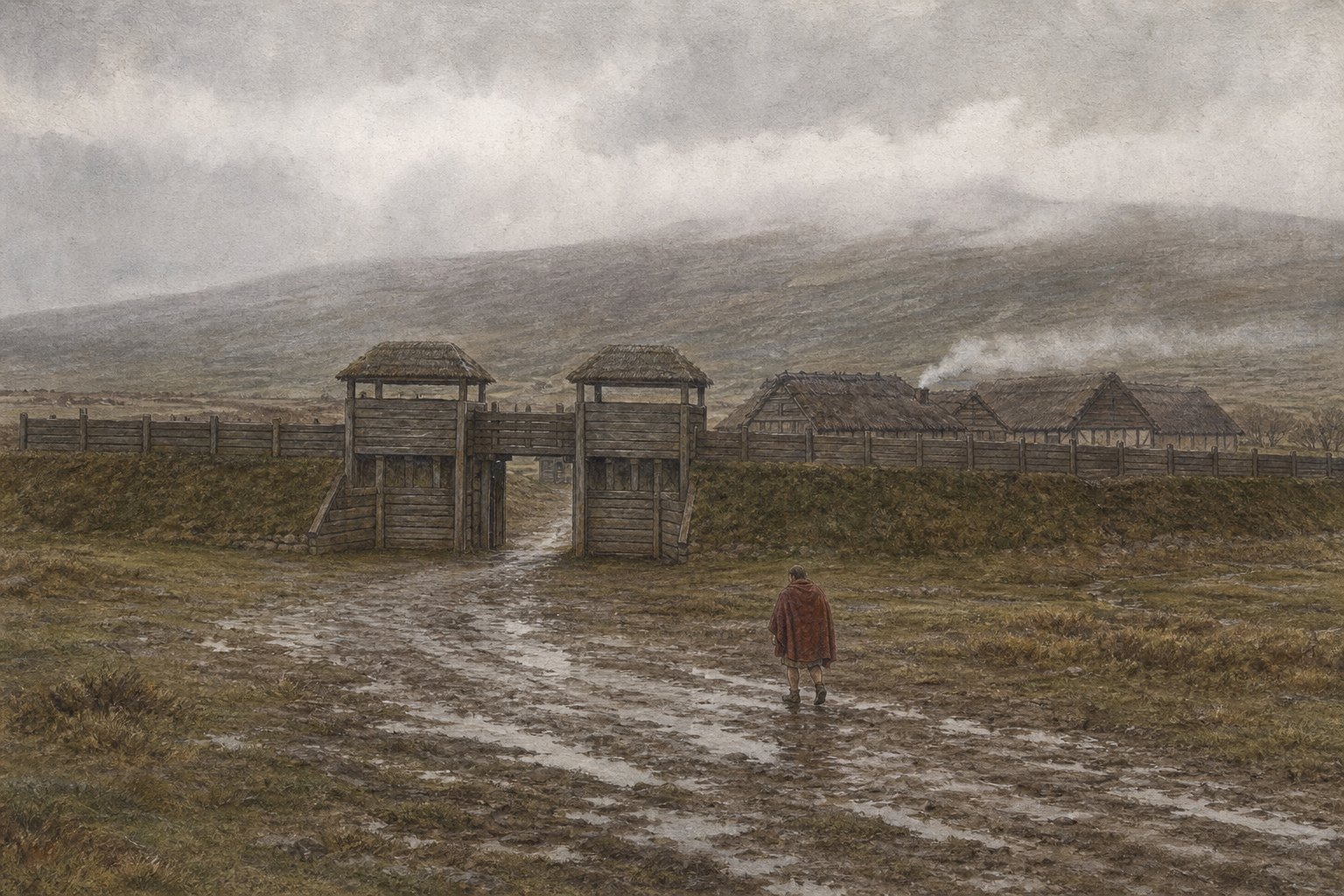
In Roman Britain around AD 100, a woman named Claudia Severa wrote a birthday invitation in her own hand — and the wood survived.
It was found at the fort of Vindolanda in 1973, on a piece of birch wood the size of a postcard. The four lines Severa added at the bottom right are, as far as anyone has been able to determine, the oldest surviving example of writing in Latin by a woman, anywhere in the empire. The invitation almost did not survive at all — it was burned in a household bonfire around AD 105, when the cohort her friend’s husband commanded marched out of Britain. Rain put the fire out before it finished.
This is the story of who Claudia Severa was, who she was writing to, what the four lines say, what the world looked like around them, and how the document came to be sitting in the British Museum tonight.
A long, slow, listening-pace history. Made for late evenings.
Sources
as published with the film- A.K. Bowman & J.D. Thomas, Tabulae Vindolandenses II (1994), III (2003), IV (2010–2011). British Academy / Oxford
- Roman Inscriptions of Britain, online edition: romaninscriptionsofbritain.org
- British Museum, collection record 1986,1001.64
- J.N. Adams, on the language of Roman women’s speech and the register of “anima mea.”
- A.K. Bowman, Life and Letters on the Roman Frontier (Routledge)
- Vasco, Dyer, Hobbs & Cartwright (Feb 2026), Raman spectroscopy of Vindolanda inks, Journal of Analytical Methods in Chemistry
- Vindolanda Trust excavation reports — R. Birley, A. Birley, A.R. Birley
- G. Argetsinger, “Birthday Rituals on the Roman Calendar,” Classical Antiquity 11.2 (1992)
Something wrong here? Tell us — corrections are made in public.