
Hampton Court·1543
The King’s Laundress
3 hr 39 min·4 June 2026·16 chapters·9 sources
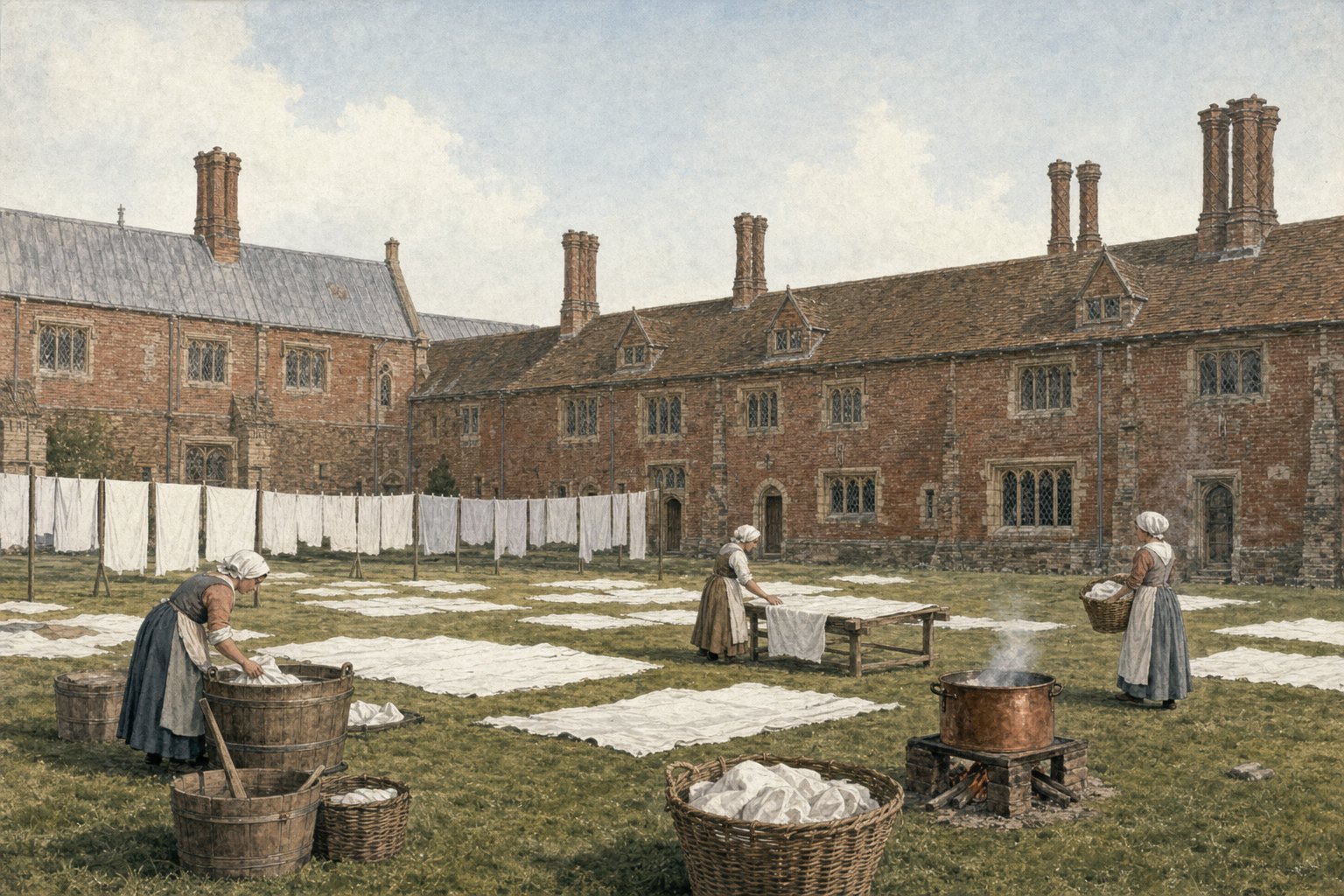
The hidden chemistry behind Tudor laundry — and why Henry VIII’s linen was whiter than anything we wash today. A long, slow documentary on the forgotten science of clean cloth in sixteenth-century England.
In 1543, a woman named Anne Harris held the position of chief napery laundress to Henry VIII at Hampton Court. She was paid £20 a year — the wage of a country parson — for work that the king’s household could not run without. What she actually did in the laundry yard, the chemistry she used, and the ordinary substances she relied on to produce the brilliant whites of the Tudor wardrobe, is the subject of this slow walk through three centuries of forgotten craft knowledge.
The episode covers the Great Wash cycle, the chemistry of wood-ash lye and fermented chamber-lye, the optical trick that linked Tudor smalt to the optical brighteners on every modern detergent bottle, the rise of starching and the great Elizabethan ruff, the structural position of the laundress in the period, and the strange continuity between laundry chemistry and the saltpetre that fired the king’s gunpowder. A long-form sleep documentary on the ordinary past.
Chapters
16 · each opens the film at that pointSources
as published with the film- Eltham Ordinances (1526), household papers of Henry VIII
- National Archives, Kew (household accounts, 1543)
- Historic Royal Palaces (Tudor World exhibition, 2024)
- Gervase Markham, The English Housewife (1615)
- Eleanor Hubbard, City Women (Oxford University Press, 2012)
- David Cressy, Saltpeter (Oxford University Press, 2013)
- Ruth Goodman, How to Be a Tudor (experimental archaeology)
- Royal proclamation of Charles I (1625), on the collection of urine
- William Shakespeare, The Merry Wives of Windsor (c. 1597)
Something wrong here? Tell us — corrections are made in public.