
An English village·c. 1300
What They Actually Ate
2 hr 26 min·17 June 2026·17 chapters·7 sources
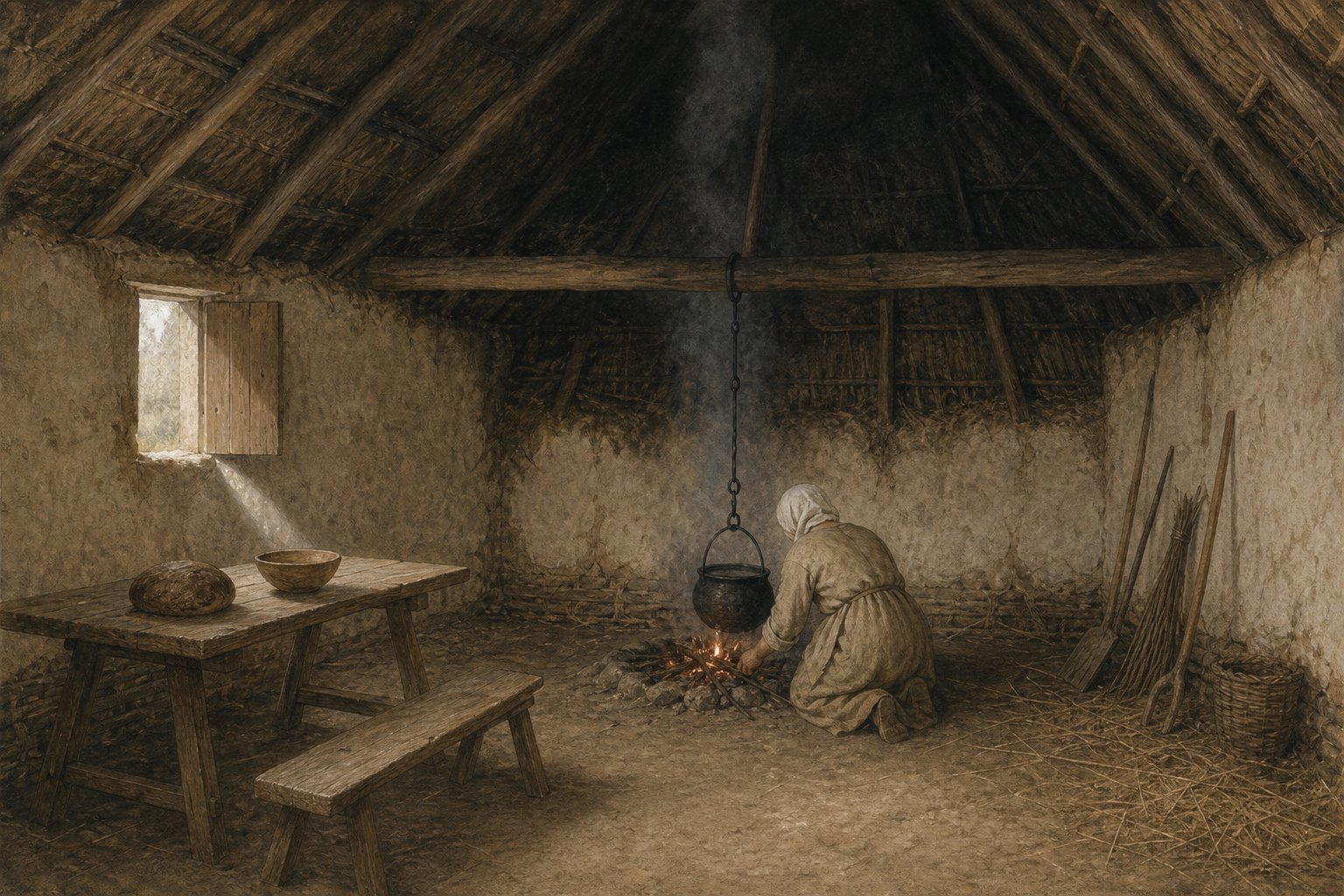
The history books promised them grey gruel and little else. What the manor rolls, the rubbish pits, and their own bones actually reveal is a table far richer — and far stranger — than the legend ever allowed.
Across a single long harvest day in an English village around the year 1300, we walk through what a peasant household really ate: the dark bread and the weak ale, the pot that was never quite empty, the autumn pig, the beans they called “poor man’s meat,” and the lean “hungry gap” the legend forgets. Reconstructed from medieval accounts and the latest archaeology — and told slowly and quietly, with the lights low — it’s made to be listened to, or to fall asleep to.
Chapters
17 · each opens the film at that pointSources
as published with the film- Christopher Dyer — Standards of Living in the Later Middle Ages; Everyday Life in Medieval England
- C. M. Woolgar — The Culture of Food in England, 1200–1500
- Julie Dunne & colleagues (University of Bristol) — lipid-residue analysis of medieval cooking pots
- Judith M. Bennett — Ale, Beer, and Brewsters in England
- Michael Camille — Mirror in Parchment: The Luttrell Psalter
- Philip Slavin — the Great Famine & the cattle panzootic, 1315–22
- Excavations at Wharram Percy & West Cotton; Langland’s Piers Plowman; the chronicles of Trokelowe & Walsingham
Something wrong here? Tell us — corrections are made in public.